How to Find Apartments That Take Large Dogs Without the Stress


.svg)
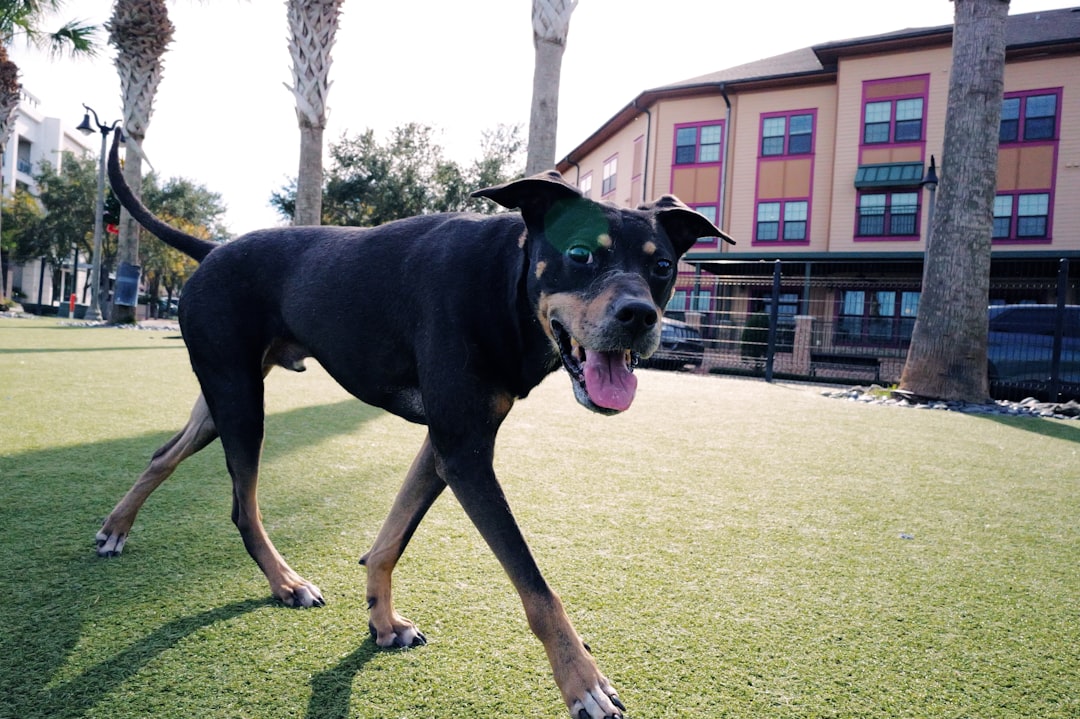
Finding Pet-Friendly Apartments Without the Stress
Finding a pet-friendly apartment with a dog can take extra planning, especially when listings use broad terms that do not explain the full policy.
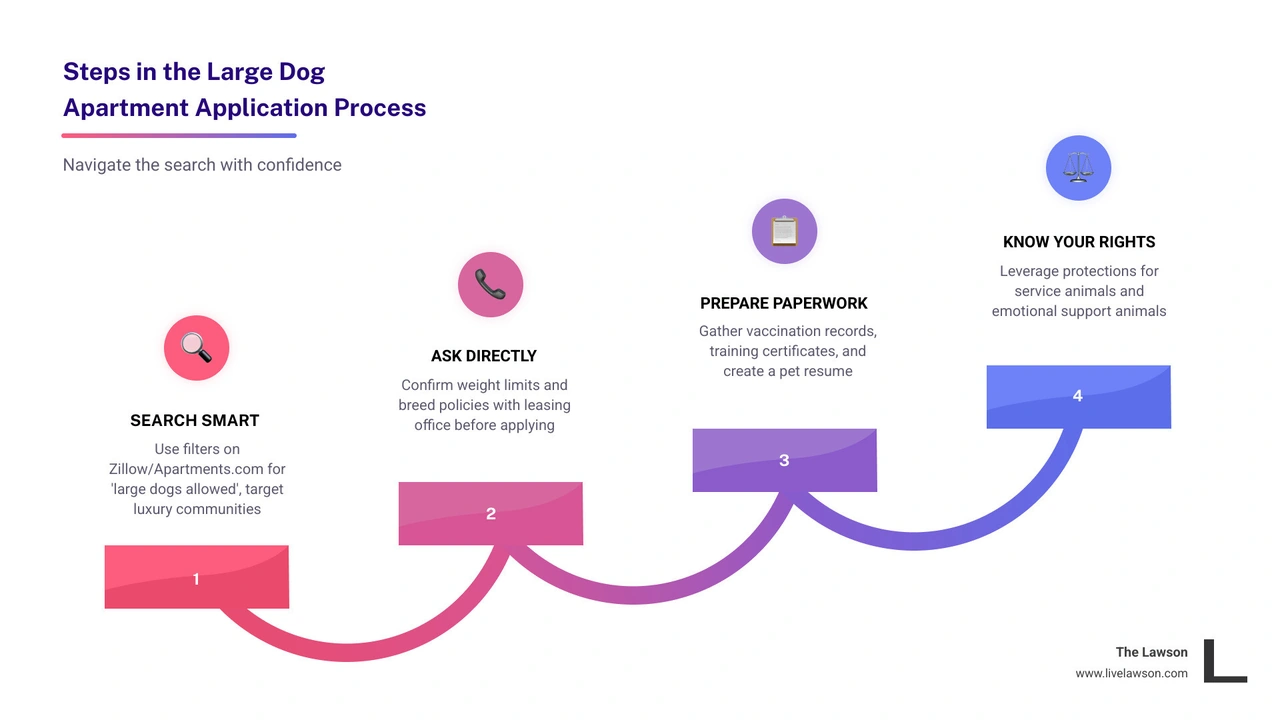
Here is a quick overview of what to expect and where to start:
- Search smart: Use filters on Zillow or Apartments.com and select pet-friendly options, then verify the full policy directly.
- Ask directly: Confirm weight limits, breed policies, and required documentation with the leasing office before applying.
- Prepare your paperwork: Vaccination records, training certificates, and a pet resume can strengthen your application.
- Know your rights: Service animals and emotional support animals may have legal protections that differ from standard pet policies.
- Target the right properties: Communities with clear pet rules and practical amenities often make day-to-day living easier.
Over 59% of renters have pets, yet many apartment communities limit dogs by weight, breed, age, or quantity. That leaves many renters sorting through listings that say "pet-friendly" without explaining the details.
The good news is that the right apartment can be easier to find when you approach the search with a clear checklist, strong documentation, and a solid understanding of how pet policies work.
This guide walks through each step of that process.
Basic pet-friendly apartment glossary:
Understanding Common Restrictions for Pet-Friendly Apartments
The first thing to know is that "pet-friendly" does not always mean the same thing from one property to another. A listing may allow pets generally while still limiting dogs by size, breed, age, or quantity.
The most common restrictions include:
- Weight caps, often between 25 and 50 pounds
- Breed restriction lists
- A maximum of two pets per apartment
- Required pet screening through a third-party platform
- Vaccination and licensing requirements
- Rules about dogs in common areas
- Extra approval steps for puppies or dogs without rental history

Some communities are more transparent than others. That is why local resources like the San Diego Humane Society pet-friendly housing list can help you identify places to contact first. It is also helpful to compare listings with our own guides on pet friendly rentals and apartments that allow pets near me.
A few restrictions deserve special attention:
- Weight limits: A common issue for many dog owners, even when a dog is calm and well trained.
- Breed bans: These often affect dogs based on appearance or listed breed mix, regardless of actual behavior.
- Conditional approval: Some properties may review dogs individually, but that does not mean approval is automatic.
- Screening profiles: Many communities now require a pet profile with vet records, photos, and behavior information.
Why Landlords Impose Size and Breed Limits
Most restrictions come down to risk management, not personal preference.
Property managers often worry about:
- Damage to flooring, doors, blinds, and common areas
- Noise complaints from barking or hallway activity
- Safety concerns, whether justified or not
- Insurance limitations tied to certain breeds
- Liability exposure if a dog injures another resident or pet
Insurance is a major factor. Some policies impose exclusions based on dog breed or bite history, so apartment operators may build those limits into the lease. In other cases, older buildings may not be designed for easier pet living, especially where there are tight hallways, less durable flooring, or limited outdoor access.
That said, broad restrictions do not always reflect how an individual dog behaves in a home. A lease usually relies on written rules rather than day-to-day temperament, which is why clear communication matters so much during the application process.
Essential Documentation for Your Pet Application
A strong application package can make a real difference, especially when a property reviews pets case by case.
Bring together:
- Current vaccination records
- Rabies documentation
- Spay or neuter records if applicable
- City license information if required
- Training certificates
- A recent photo
- Contact information for your veterinarian
- Prior landlord references
- Any dog walker, trainer, or daycare references
- Proof of renter or pet liability insurance, if you carry it

If you want a simple starting point for your search and paperwork, our guide to Pet Friendly Rentals is a helpful companion.
Creating a Compelling Pet Resume
A pet resume sounds a little silly until it works. Think of it as a one-page summary that helps leasing teams see your dog as an individual, not just a number on a weight chart.
Include:
- Dog's name, age, breed, and weight
- Clear, friendly photo
- Temperament summary
- Training history
- Daily routine
- House-training status
- Crate training information if relevant
- Exercise habits
- Vet contact info
- Emergency contact
- Previous rental history
- References from landlords or pet professionals
A good personality section might say something like:
- Calm in the home
- Comfortable with elevators
- Walks well on leash
- No history of property damage
- Friendly with visitors
- Used to apartment living
Keep it factual and specific. "Loves everyone" is nice, but "completed obedience training and has no bite history" is more useful.
If your dog has earned a Canine Good Citizen certificate or similar training credential, include it. Formal training helps reassure landlords that your dog is manageable in shared spaces.
Navigating the Search for Pet-Friendly Apartments
Searching for a pet-friendly apartment is part filtering, part research, and part asking detailed questions until you get a clear answer.
Start with local search tools and listing platforms, but do not stop there. Always verify the policy directly with the leasing office before paying an application fee or scheduling movers.
Helpful starting points include:
- Apartments that allow pets near me
- San Diego pet-friendly apartment listings on Zillow
- The San Diego Humane Society pet-friendly housing list
When you contact a property, ask:
- What is the exact dog weight limit?
- Are there breed restrictions or restricted mixes?
- Is there a pet interview or temperament review?
- Are there floor or location recommendations for dog owners?
- Are pet records required before approval?
- Is the pet policy written into the lease or community rules?
- Are assistance animals handled through a separate accommodation process?
Do not rely only on the checkbox that says "pets allowed." That filter is useful, but it is not enough.
Utilizing Specialized Search Tools for Pet-Friendly Apartments
General listing sites help, but better results usually come from combining several methods.
Use:
- Search filters for pet-friendly listings
- Saved searches and alerts
- Local humane society housing resources
- Neighborhood groups and community boards
- Conversations with vets, trainers, and dog walkers
- Property websites with a clearly posted pet policy
Some communities also use screening platforms to collect pet information before move-in. If that comes up during your search, ask whether screening is simply for records or whether it affects approval decisions.
As you compare communities, look for clues that they are genuinely set up for dogs rather than merely allowing them on paper. Listings with dog runs, pet relief areas, washing stations, durable flooring, and nearby green space are usually better signs than a vague "pet-friendly" label.
Discussing Pet Policies with Apartments
Sometimes the answer is not a hard no. It is a "maybe, show us more."
If a property seems open to discussion, these strategies can help:
- Offer your pet resume up front
- Suggest a pet interview or meet-and-greet
- Provide training records
- Share prior landlord references
- Show proof of liability coverage if available
- Ask whether the policy allows case-by-case review
- Request that any approval be added to the lease in writing
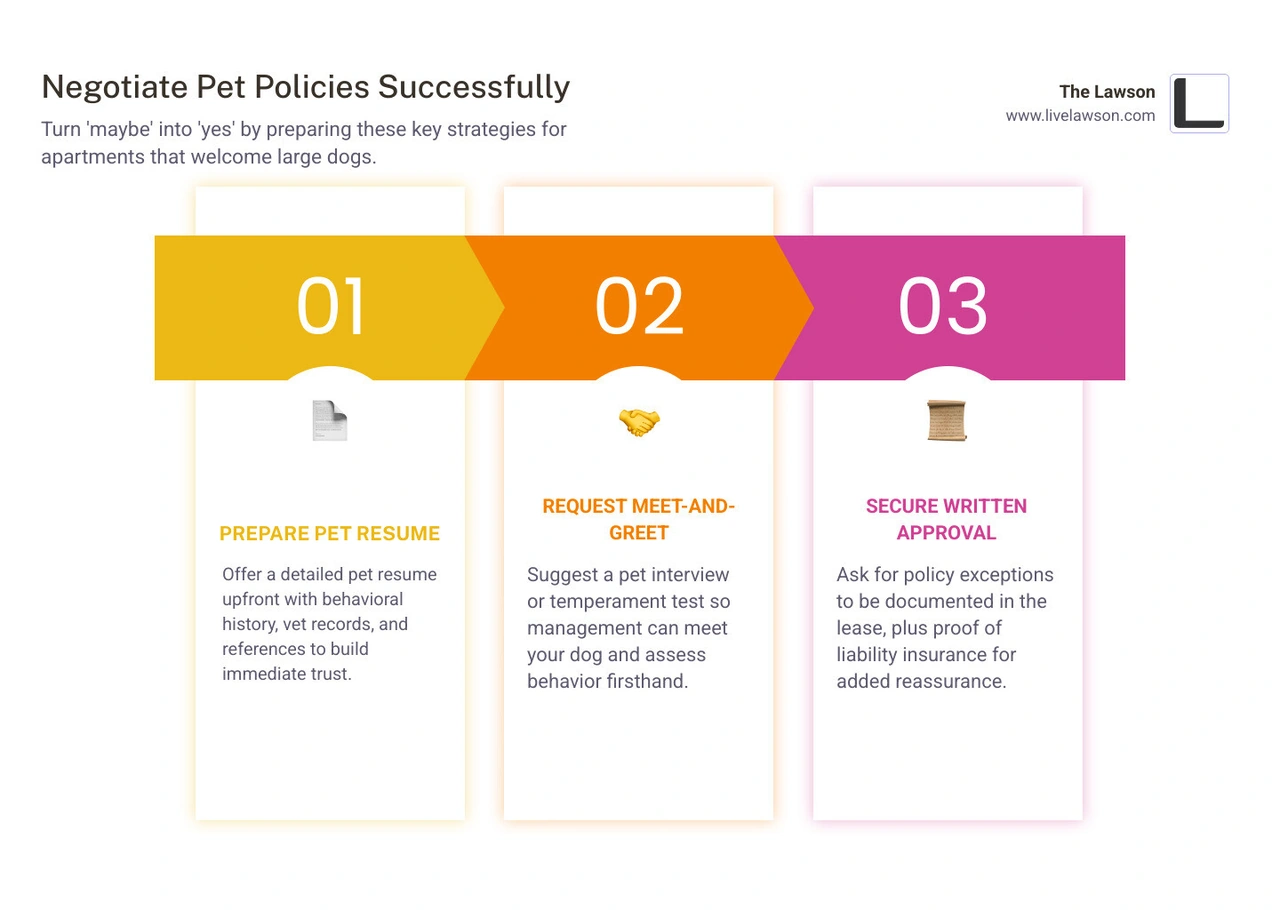
Some communities may consider individual temperament testing instead of relying only on breed labels. Others may be willing to review a dog if management can meet them first. Keep the conversation polite, direct, and documented.
A few practical tips:
- Ask early, not after approval
- Be honest about size and breed mix
- Keep emails and written confirmations
- Do not assume a verbal yes is enough
- Do not try to get around a pet restriction, because that can create lease issues later
Legal Rights and Service Animal Protections
This section matters because pets, service animals, and emotional support animals are not handled the same way under housing rules.
Under the Fair Housing Act, housing providers may need to make reasonable accommodations for assistance animals, even when a property has a no-pet policy or standard pet restrictions. The exact process depends on the housing type and whether an exemption applies, so renters should review their situation carefully.
Some communities clearly note that assistance animal requests are handled separately from standard pet rules. The key takeaway is that assistance animals are not simply "pets with paperwork."
Understanding ESA and Service Animal Guidelines
Here is a simple comparison:
| Type | What it is | Training required | Housing treatment |
|---|---|---|---|
| Service animal | Animal that performs tasks for a person with a disability | Yes, task-based training | Usually not subject to ordinary pet rules |
| Emotional support animal | Animal that provides support related to a disability | No specialized task training required | May qualify for reasonable accommodation in housing |
A few basic points:
- Service animals and emotional support animals can have housing protections that ordinary pets do not.
- A landlord may request reliable documentation for an ESA-related housing accommodation when the disability or need is not obvious.
- Pet fees and pet rent generally do not apply to approved assistance animals.
- Breed or weight limits may not apply the same way when an accommodation is legally required.
- Not every property falls under the same rules, and some smaller owner-occupied housing may be exempt.
This area can get complicated fast, so it is important to use accurate, current documentation and communicate through the accommodation process rather than the normal pet approval route.
Important note: online "certificates" bought in a few clicks are often not enough by themselves. What matters is reliable documentation that supports the disability-related need for the animal.
Top Amenities to Look for in Pet-Friendly Communities
A truly pet-friendly community does more than allow dogs on paper. It makes daily life easier for both residents and their pets.
Based on common features highlighted across pet-friendly properties, the most useful amenities include:
- Dog parks or fenced relief areas
- Pet washing or grooming stations
- Waste bag stations
- Durable flooring
- Easy outdoor access
- Nearby parks and walking routes
- Good sound insulation
- Spacious layouts
- Clear pet rules that are easy to follow
Communities that invest in pet amenities tend to understand how people actually live with dogs. Features like a dog park, pet washing station, or grooming area are a good sign that a property takes pet-friendly living seriously.
For San Diego renters, wellness and convenience matter too. If you want a community that supports both your routine and your dog's, our guide to pet friendly apartments with gym is worth a read.
Features That Make High-Rise Living Easier for Pets
In an urban setting, some design details make a bigger difference than people expect.
Look for:
- Hard-surface flooring that is easier to clean
- Good ventilation
- Sound-reducing construction
- Convenient elevator access
- Private outdoor space, if available
- Nearby sidewalks and green space
- Amenity areas that make before-work and after-work walks easier
At The Lawson in San Diego, pet-friendly living works best when the home itself feels comfortable and functional. Expansive layouts, practical finishes, and access to amenities can make apartment life much smoother for residents with dogs. Wellness spaces for residents can also make daily routines feel more balanced.
Best Practices for Responsible Pet Ownership in Apartments
Getting approved is only step one. Keeping a good relationship with management and neighbors is what protects your living situation long term.
Dogs can absolutely thrive in apartments when their needs are met. The basics are simple:
- Provide daily exercise
- Stick to a routine
- Manage noise
- Clean up promptly
- Follow leash rules
- Respect common areas
- Keep records updated
- Stay within the two-pet limit per apartment
Many dogs need regular physical activity and mental stimulation. In many cases, that means at least one solid walk before work, another after work, and structured enrichment throughout the day. A bored dog is more likely to bark, pace, scratch doors, or invent hobbies that your security deposit would rather avoid.
For local inspiration, our guide to pet friendly apartments in San Diego 92102 can help you think through neighborhood fit and daily routine.
Maintaining Positive Relationships with Neighbors
Good apartment dog etiquette goes a long way.
Focus on:
- Keeping your dog leashed in shared spaces
- Not allowing door rushing or jumping on neighbors
- Picking up waste immediately
- Avoiding long barking sessions
- Wiping muddy paws before heading through halls
- Being mindful near elevators and building entrances
- Socializing your dog so routine encounters stay calm
A few extra habits help too:
- Schedule higher-energy play for appropriate times of day
- Use puzzle toys and training games indoors
- Practice calm elevator entries and exits
- Let neighbors know you are working actively on manners if needed
People are much more relaxed around dogs when they see a handler who is attentive, consistent, and respectful.
Frequently Asked Questions about Dog-Friendly Housing
What are the most common breed restrictions?
Common restricted breed lists often include dogs identified as Pit Bull-type breeds, Rottweilers, Doberman Pinschers, Chows, Akitas, wolf-hybrids, and some other breeds or mixes. Policies vary by property, so always ask for the exact written list. Just as important, ask how mixed breeds are evaluated.
How does pet liability insurance help with my application?
Pet liability insurance can help show that you take responsibility seriously. For some landlords, it reduces concern about injury claims or accidental damage. It will not override every rule, but it can strengthen your application when combined with training records, references, and a solid pet resume.
Can I appeal a weight limit if my dog is well-behaved?
Sometimes, yes. The best approach is to ask whether the community allows case-by-case review. Then provide a pet resume, vaccination records, training certificates, landlord references, and proof that your dog has a calm rental history. You can also request a pet interview if management is open to it. Always get any exception in writing.
Conclusion
Finding a pet-friendly apartment with a dog can feel like a full-time side quest, but the process gets much easier when you know what to look for and how to present your pet well.
The short version:
- Expect weight and breed restrictions to be common
- Verify every pet policy directly
- Lead with documentation
- Understand the difference between pets and assistance animals
- Look for communities designed with real pet living in mind
At The Lawson, pet-friendly apartment living in San Diego should feel practical, comfortable, and elevated. Spacious homes, thoughtful amenities, and a great location can make daily life easier for both residents and their dogs.
If you are ready to continue your search, explore more information about pet-friendly search services.

Related Posts


CONTACT US
Everything starts with hello. Fill out the form below to stay in the loop with updates on The Lawson.
.jpg)