Don't Get Zapped: A Guide to Apartment EV Charging


.svg)
EV Charging Apartments: What Every Renter Needs to Know in 2026
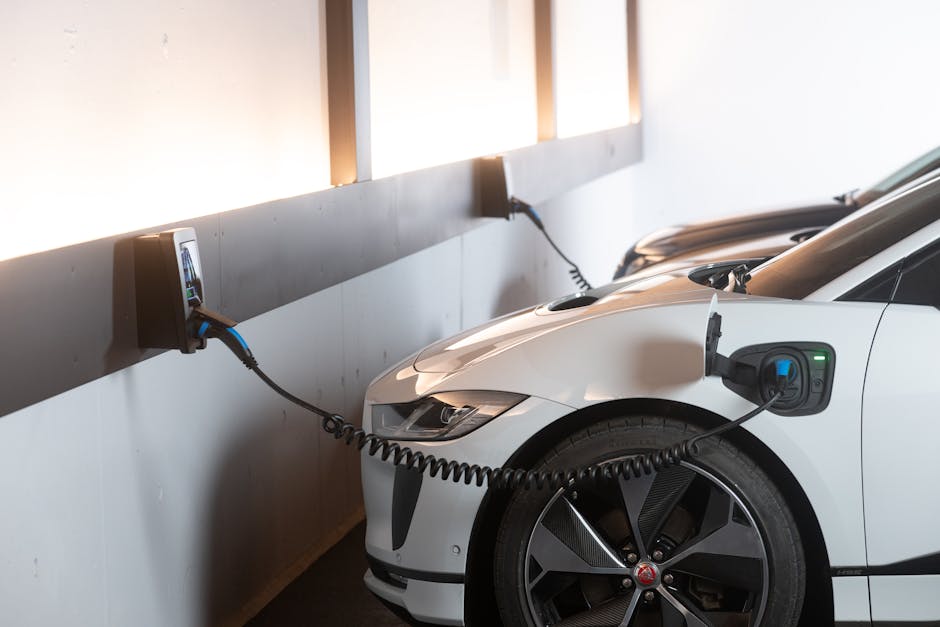
EV charging apartments are residential communities that provide on-site electric vehicle charging stations for residents — and in 2026, they've become one of the most sought-after amenities in the rental market.
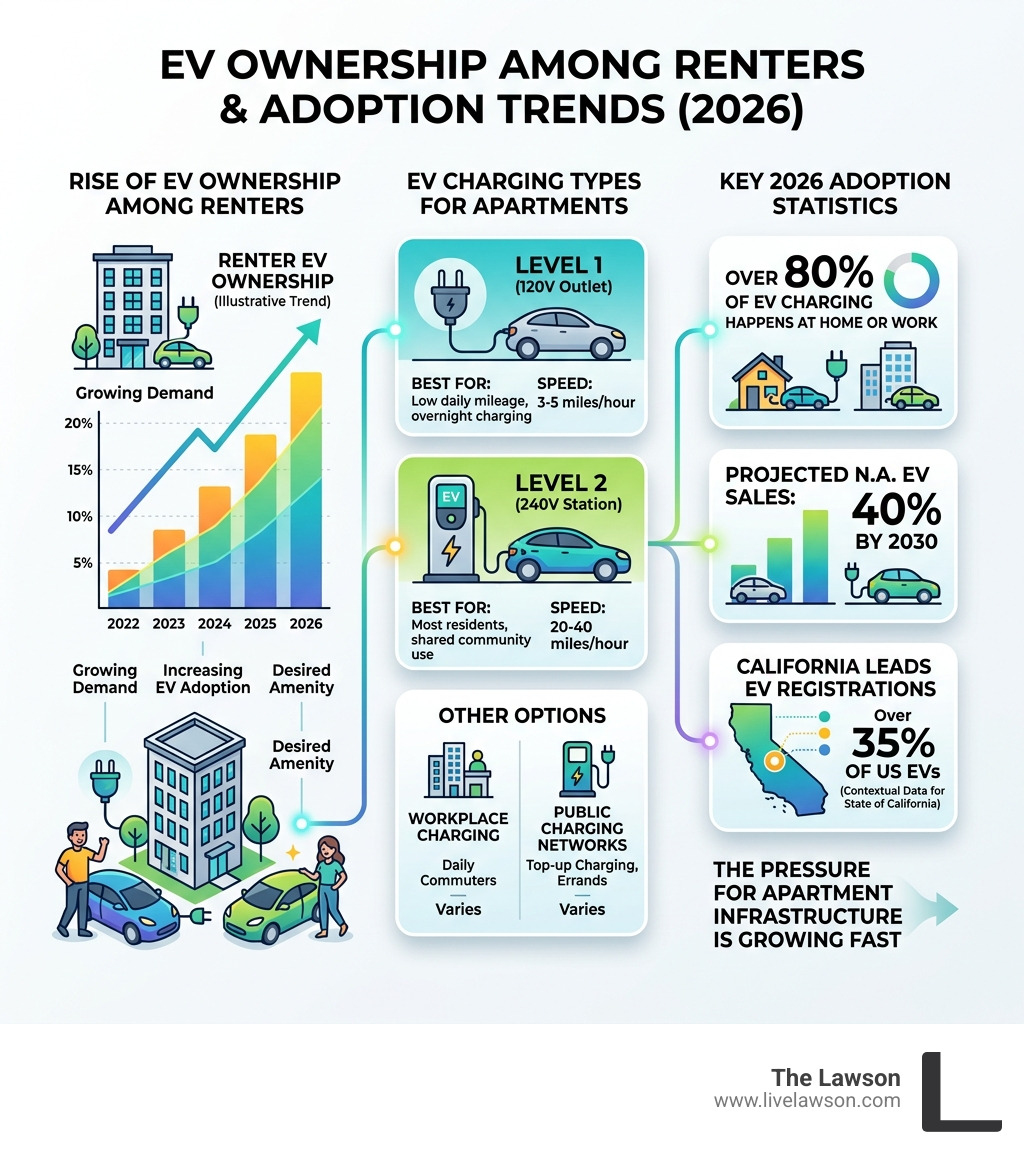
Here's a quick look at your main EV charging options as an apartment renter:
| Charging Option | Best For | Speed |
|---|---|---|
| Level 1 (120V outlet) | Low daily mileage, overnight charging | 3-5 miles/hour |
| Level 2 (240V station) | Most residents, shared community use | 20-40 miles/hour |
| Workplace charging | Daily commuters | Varies |
| Public charging networks | Top-up charging, errands | Varies |
The numbers tell a clear story. Over 80% of EV charging happens at home or at work — not at public stations. And with EV sales in North America projected to hit 40% by 2030, the pressure on apartment communities to provide charging infrastructure is growing fast.
For renters, the challenge is real. Most apartments weren't built with EV charging in mind. Older buildings, shared parking, and complex electrical systems make it harder than just plugging in at home like a single-family homeowner would.
But things are changing quickly — and knowing your options matters whether you already own an EV or are thinking about getting one.
Why EV Charging Apartments are the New Standard
As we navigate through April 2026, the shift toward electric mobility is no longer a "future" concept—it is our current reality. For those of us living in urban environments like San Diego, the ability to plug in where we sleep has transitioned from a luxury perk to a baseline requirement.
The data backing this shift is staggering. North American EV sales are predicted to reach 40% by 2030 and soar over 60% by 2035. In California, we are already leading the charge, with the state accounting for over 35% of all EVs registered in the United States. When you consider that 80% of all charging occurs at home or work, it becomes clear why EV charging apartments are the new gold standard for modern living.

Benefits of EV Charging Apartments for Tenant Retention
We've seen a massive shift in what residents prioritize when looking for a new home. It’s no longer just about having a pool or a gym; it’s about infrastructure that supports a sustainable lifestyle. According to recent NMHC surveys, 27% of residents are actively interested in on-site charging stations. This demand is even higher among younger demographics: 52% of renters under 45 are considering an EV for their next vehicle purchase.
For property managers, providing these stations isn't just a courtesy; it's a retention strategy. Research shows that properties with charging saw 8–12% higher tenant renewal rates among EV drivers. By offering these solutions, communities position themselves as "signal amenities"—a clear indicator of a forward-thinking, high-quality living environment. For more insights on how these communities are evolving, check out this 2026 Multifamily EV Charging Solutions Guide: Condos & Apartments | AmpUp.
Environmental Impact and Corporate Responsibility
Beyond the convenience for residents, the push for EV charging apartments aligns with broader Environmental, Social, and Governance (ESG) goals. By facilitating cleaner transportation, we are collectively reducing our carbon footprint. For many of us, choosing an EV is a personal commitment to the planet, and living in a community that supports that choice makes the transition seamless.
Transitioning to an EV lifestyle as a renter can feel daunting, but as highlighted in the EV Charging for Apartments 2026: The Ultimate Renter's Guide, it is more practical now than ever before. Sustainable living shouldn't be a chore; it should be integrated into your daily routine.
Technical Breakdown: Level 1, Level 2, and DC Fast Charging
Understanding the "juice" behind the station is key to managing your expectations and your morning commute. Not all chargers are created equal, and the type of hardware installed in a building dictates how quickly you can get back on the road.

| Feature | Level 1 | Level 2 | DC Fast Charging |
|---|---|---|---|
| Voltage | 120V (Standard Outlet) | 240V (Heavy Duty) | 480V+ (Industrial) |
| Power Output | ~1.8 kW | Up to 19.2 kW | 50kW - 350kW |
| Range Per Hour | 3-5 miles | 20-40 miles | 100+ miles in 20 mins |
| Best Use Case | Low mileage/Emergency | Daily home charging | Road trips/Quick stops |
Choosing the Right Setup for Multifamily Communities
In a multifamily setting, the "how" is just as important as the "what." We typically see three main setups:
- Assigned Charging: A dedicated station or outlet at your specific parking spot. This offers the ultimate convenience—your spot, your charger.
- Community Charging Hubs: Shared stations in common areas. Residents use an app to see availability, plug in, and move their car once the charge is complete.
- Mixed-Use Scenarios: Stations shared between residents and the general public or retail guests, often managed through access control software.
For a deeper dive into how modern properties are structuring these parking layouts, visit Apartment EV Charging Station Solutions for Modern Properties.
Portable and Smart Charger Options for Residents
If your current community doesn't have a hardwired Level 2 station yet, don't panic. Many residents utilize "smart outlets" or Level 1 portable units. These can plug into a standard 120V outlet and provide enough range for those with short daily commutes (under 40 miles). Some newer technologies even allow for "plug-and-play" submetering, where a simple outlet is upgraded with a smart faceplate that tracks your specific electricity usage, allowing you to pay for only what you use without the need for a massive infrastructure overhaul.
Overcoming Infrastructure and Management Challenges
Installing chargers in an existing apartment complex isn't as simple as sticking a plug in the wall. It requires a careful dance of electrical capacity and smart management.
One of the biggest hurdles is electrical capacity. Older buildings often have limited "headroom" in their electrical panels. If ten residents all plug in their EVs at 6:00 PM, it could theoretically overwhelm the system. This is where Power Sharing technology comes in. Smart software can intelligently distribute available power across multiple vehicles, ensuring everyone gets a charge without needing an expensive panel upgrade.
Furthermore, "Right to Charge" laws in states like California protect your ability to install a charger at your own expense, provided certain conditions are met. Additionally, new installations must be ADA-compliant, ensuring that charging is accessible to all residents, regardless of physical ability.
Smart Software Features for Seamless Management
The secret sauce of modern EV charging apartments is the software. High-end networks like ChargePoint (which boasts over 385,000 ports) provide property managers with a dashboard to monitor everything in real-time. Key features include:
- Access Control: Ensuring only residents can use the stations.
- Automated Billing: No more manual math; the software tracks kWh usage and bills the resident directly.
- Real-time Analytics: Helping managers see when demand is highest so they can plan for future expansions.
To see how these turnkey solutions work in action, you can explore the Multifamily EV Solution: Apartment & Condo Charging Stations platform.
Steps for Successful Implementation
If you are a resident advocating for chargers, or a manager looking to upgrade, the process generally follows these steps:
- Needs Assessment: Surveying residents to gauge current and future demand.
- Site Evaluation: A certified electrician checks the existing electrical load and parking layout.
- Permitting: Navigating local San Diego building codes and utility requirements.
- Installation: Mounting the hardware and connecting the networking software.
- Maintenance: Regular software updates and physical inspections to ensure 98%+ uptime.
Regional Spotlight: Southern California EV Infrastructure
Southern California is the undisputed heart of the EV movement. In San Diego, our urban landscape is rapidly evolving to accommodate the "electric lifestyle." With over 35% of the nation's EVs registered in our state, the infrastructure here is more robust than anywhere else in the country.
Finding EV Charging Apartments in San Diego and Beyond
When searching for your next home, filtering for EV charging is now a standard part of the process. In Los Angeles alone, there are over 6,200 apartment communities offering this amenity. In San Diego, high-demand neighborhoods like Downtown and Little Italy are leading the way with integrated charging solutions.
If you're currently on the hunt, check out these San Diego Apartments with EV Charging to see what's available. For more general advice on navigating the local market, our Apartment Hunting Tips can help you find a place that fits both your car and your lifestyle.
Future Trends in Southern California EV Adoption
Looking ahead toward the rest of 2026 and beyond, we expect to see even more innovation. This includes:
- Private Garage Chargers: New luxury developments are increasingly including pre-wired 240V outlets in individual private garages.
- Carshare Integration: Some communities are partnering with EV carshare services, allowing residents to enjoy an electric ride without even owning a car.
- Workplace Growth: As more San Diego employers install chargers, the "charging gap" for renters will continue to shrink.
Stay updated on local developments through the San Diego EV Infrastructure News portal.
Frequently Asked Questions about Apartment Charging
Can I charge my EV if my apartment doesn't have a dedicated station?
Absolutely. Many renters rely on a "hybrid" charging model. This involves using Level 1 charging (if a standard outlet is accessible), taking advantage of workplace charging during the day, or integrating public Level 2 and DC fast chargers into their weekly routine—such as plugging in while grocery shopping or at the gym.
How do property managers handle electricity billing?
The most common method in 2026 is through networked software. Residents create an account, scan an RFID card or use a mobile app to start the session, and are billed based on the amount of electricity (kWh) consumed. Some properties also offer flat-rate monthly subscriptions for dedicated spots.
What should I look for when apartment hunting as an EV owner?
Beyond just the presence of a charger, ask about:
- Network Uptime: Is the charger frequently broken?
- Parking Proximity: Is the charger in a well-lit, convenient area?
- Access Rules: Are there time limits or "idle fees" if you leave your car plugged in too long?
For more tips on what to look for in a modern community, visit our Blog.
Conclusion
At The Lawson, we understand that your home is more than just a place to sleep—it’s a launchpad for your lifestyle. Our luxury apartment communities in San Diego are designed with the modern resident in mind. From our expansive studios to our two-bedroom units, we prioritize the amenities that matter most to you.
Whether you're taking in the skyline views from our rooftop sky deck, relaxing in the sauna, or taking a dip in the hot tub and cold plunge, we provide a premium experience that keeps pace with the world around you. And yes, that includes supporting your transition to a cleaner, electric future. We are proud to offer a pet-friendly environment (with a two-pet limit) that reflects the best of San Diego living.
Ready to power up your lifestyle? More info about The Lawson is just a click away. Come see how we’re redefining luxury living in the heart of San Diego.

Related Posts



CONTACT US
Everything starts with hello. Fill out the form below to stay in the loop with updates on The Lawson.
.jpg)