Ice Ice Baby: How to Cold Plunge in Your Apartment


.svg)

Cold Plunging in Your Apartment Is More Doable Than You Think
How to cold plunge in apartment settings comes down to four core steps:
- Choose your setup - inflatable tub, compact rigid tub, vertical barrel, or bathtub chiller attachment
- Pick the right spot - bathroom corner, balcony, or living room on a hard, flat floor (not carpet)
- Fill and drain safely - use a faucet-to-hose adapter to fill; drain via a small pump into your shower or tub
- Hit the right temperature - aim for 50-59°F using cold tap water plus ice (1 gallon ice per 3 gallons water), or an electric chiller
Cold plunging has moved well beyond pro training facilities and high-end spas. In 2026, it's one of the fastest-growing at-home wellness habits — and apartment dwellers are fully in the mix.
The catch? Most people assume you need a backyard, a big budget, or a plumber on speed dial. You don't.
Whether you're working with a sleek bathroom corner or a reinforced balcony with a skyline view, a compact cold plunge setup is within reach. The options have gotten smaller, quieter, and smarter — and so has the process of getting one up and running without flooding your downstairs neighbor or violating your lease.
This guide walks you through everything: the right gear, the safest spots, how to fill and drain without drama, and how to actually start plunging without turning your apartment into a splash zone.

Choosing the Right Setup: How to Cold Plunge in Apartment Spaces

When we think about how to cold plunge in apartment units, the first hurdle is always the footprint. We aren't working with sprawling suburban patios, so we have to be strategic. The market for cold therapy has exploded, and by April 2026, the options for compact, urban-friendly gear are better than ever.
Inflatable Models
Inflatable tubs are the gold standard for renters. They are incredibly lightweight—often under 40 pounds when empty—making them easy to carry up to a third-floor unit. A popular option like the Chilly GOAT GO! measures just 34 inches long by 13 inches wide when inflated, fitting easily into a bathroom corner or a small balcony. When you aren't using it, you can simply deflate it and slide it under your bed.
Vertical Barrels
If you prefer a "deep soak" where you sit upright, vertical barrels are excellent space-savers. These usually have a diameter of about 27 to 30 inches. Because they use height instead of length, they have a much smaller floor footprint than traditional rectangular tubs.
Bathtub Conversion Kits
For those who don't want an extra piece of furniture, bathtub chillers are a game-changer. These units, like the HomePlunge H3, connect to your existing tub. They can cool standard tap water down to 39–55°F in about 60 to 90 minutes. It’s the ultimate "zero-footprint" solution for Apartment living? How to cold plunge in small spaces.
| Feature | Inflatable Tubs | Rigid Vertical Barrels | Bathtub Chillers |
|---|---|---|---|
| Space Required | Minimal (Foldable) | Moderate (Fixed) | None (Uses existing tub) |
| Portability | High | Low | Moderate |
| Setup Time | 10–15 minutes | Permanent | 5 minutes |
| Cooling Method | Ice or External Chiller | Integrated Chiller | External Chiller |
Structural Safety: Weight and Floor Load Limits

One of the most common questions we hear is: "Will my floor cave in?" It's a valid concern. Water is heavy—it weighs about 8.3 pounds per gallon. When you factor in the weight of the tub, the water, and your own body, you are looking at a significant "point load."
A typical compact setup holding 75 to 100 gallons can weigh between 850 and 1,000 pounds. Most modern apartment buildings are designed to handle a "live load" of about 40 pounds per square foot, but concentrated loads (like a full tub) can reach 80 to 100 pounds per square foot.
To stay safe, we recommend:
- Placement: Position your tub near a load-bearing wall (usually an exterior wall) or in a corner. These areas have the most structural support.
- Joist Direction: If you have wood-framed floors, try to place the tub perpendicular to the floor joists to distribute the weight across multiple beams.
- Consulting Pros: If you're in an older building, it’s always worth checking our Apartment Hunting Tips or speaking with building management. For more on the engineering side, check out Can You Have a Cold Plunge in an Apartment?.
Logistics: Filling, Draining, and Temperature Control
The logistics of how to cold plunge in apartment units can be tricky without a backyard hose. However, with a few inexpensive tools, you can turn your kitchen or bathroom into a filling station.
Filling Your Tub
Don't rely on the "bucket brigade." It’s exhausting and messy. Instead, buy a faucet-to-garden-hose adapter from any hardware store. These screw onto your sink faucet, allowing you to run a hose directly to your tub.
Draining Without Disaster
Draining is where most apartment dwellers run into trouble. You cannot simply tip over 80 gallons of water on a balcony; you'll flood the neighbors below. The best method is to use a small submersible utility pump. Attach a hose to the pump and run the other end into your shower drain or toilet. This ensures a controlled, slow drain that won't overwhelm your building's vertical drain stacks.
Temperature Control and Noise
To get the water cold, you have two options: ice or a chiller.
- The Ice Method: For a 1:3 ratio, you’ll need about 1 gallon of ice for every 3 gallons of water. In a 30-gallon tub, that’s 10 gallons of ice (roughly 76 pounds). This can be a lot for a standard apartment freezer to handle.
- The Chiller Method: An electric chiller is a "plug-and-play" device that keeps your water at a set temperature 24/7. Most modern chillers produce about the same noise level as a mini-fridge. To keep things neighbor-friendly, place the chiller on a vibration-dampening mat. For a detailed walkthrough, see Step-By-Step: Create The Perfect At-Home Cold Plunge.
Managing Water Flow: How to Cold Plunge in Apartment Bathrooms
Bathrooms are the safest place for an indoor setup because they already have waterproof flooring and a floor drain (or at least a nearby tub/shower).
- Splash Zones: Use a heavy-duty waterproof mat under the tub to catch drips.
- Condensation: In humid San Diego, a cold tub will "sweat." Ensure you have a well-insulated tub and keep your bathroom exhaust fan running to prevent mold.
Beginner Protocols: How to Cold Plunge in Apartment Settings Safely
If you’re new to the chill, don't try to be a hero.
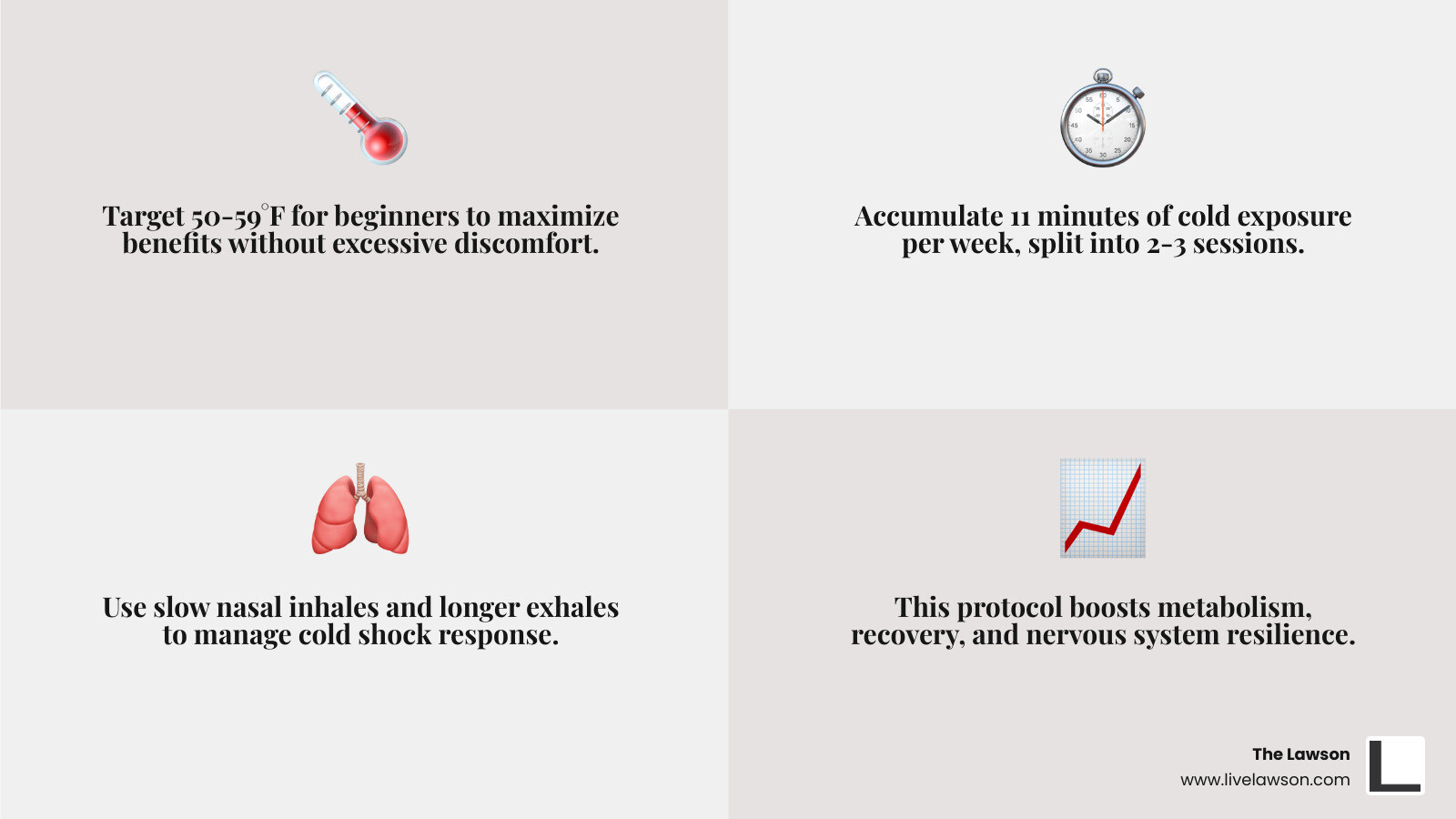
- Target Temperature: Start between 50°F and 59°F. Going below 40°F often adds more discomfort than actual biological benefit for beginners.
- The 11-Minute Rule: Research suggests that accumulating 11 minutes of cold exposure per week (divided into 2–3 sessions) is the "sweet spot" for metabolic and recovery benefits.
- Breathing: Focus on slow, nasal inhales and even longer exhales to calm your nervous system and manage the initial "cold shock."
Maintenance and Indoor Safety Protocols
Keeping your water clean is vital when the tub is sitting in your living space. You don't want "swamp water" smells in your studio apartment.
- Filtration: Most high-end units come with built-in 20-micron filters and ozone or UV-C sanitation systems. These keep the water clear for weeks.
- Water Change Cadence: Even with filtration, we recommend a full water change every 2 to 4 weeks for indoor units. If you are using a basic inflatable without a filter, you should drain and refill every 1 to 2 uses.
- Humidity Control: A cold plunge is essentially a giant dehumidifier in reverse. If you notice the air getting heavy or "musty," consider running a small dehumidifier in the room. For more maintenance tips, check out Indoor Cold Plunge Setup: Home Installation Essentials.
Frequently Asked Questions about Apartment Cold Plunging
Can I put a cold plunge on my balcony?
Yes, but with caution. You must confirm the balcony's weight capacity with your building management. A balcony is an "elevated slab," and 1,000 pounds is a heavy load for a small area. Also, ensure you have a clear drainage path that doesn't involve splashing onto the units below.
Will the chiller be too loud for my neighbors?
Most chillers hum at about 50–60 decibels, which is similar to a standard refrigerator. If you place it on a balcony, the ambient city noise in San Diego will likely drown it out. Indoors, placing it on a rubber mat and away from shared bedroom walls will keep things quiet.
Is it safe to use a cold plunge on carpet?
We strongly advise against it. Between the weight (which can permanently crush carpet fibers) and the inevitable splashing and condensation, you are looking at a high risk of mold and subfloor damage. Stick to tile, concrete, or luxury vinyl planking with a waterproof barrier.
Conclusion
Mastering how to cold plunge in apartment life is all about balancing your wellness goals with the realities of urban living. By choosing the right compact equipment, being mindful of floor loads, and using smart filling and draining tactics, you can enjoy all the recovery benefits of cold therapy without leaving your home.
At The Lawson, we believe your home should support your highest level of wellness. Our luxury apartment communities in San Diego are designed with expansive layouts and premium amenities that make living a high-performance lifestyle easy. From our rooftop sky decks with stunning skyline views to our on-site saunas and cold plunges, we provide the ultimate environment for recovery and relaxation.
Ready to upgrade your lifestyle? Start your luxury wellness journey today and discover the perfect space for your new cold plunge routine.

Related Posts


CONTACT US
Everything starts with hello. Fill out the form below to stay in the loop with updates on The Lawson.
.jpg)